
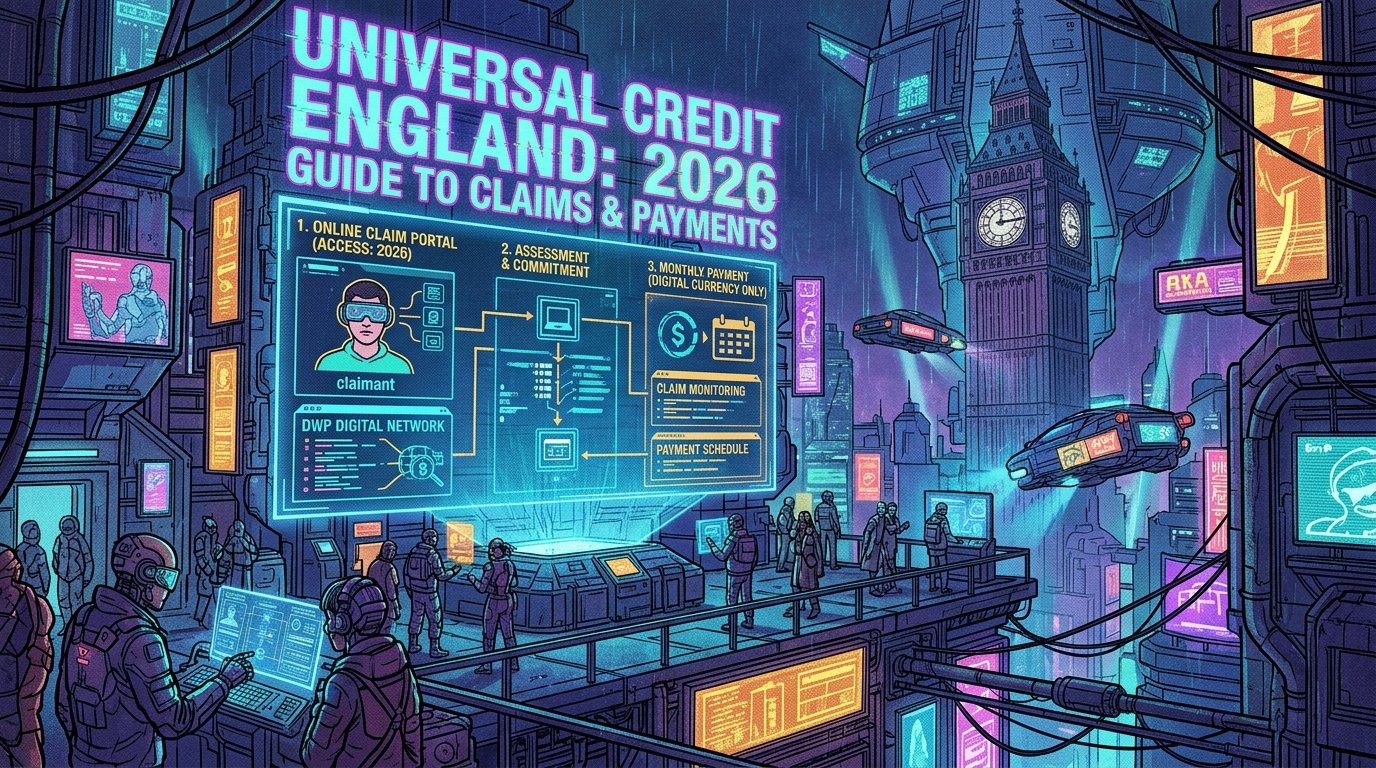
Universal Credit England: 2026 Guide to Claims & Payments
Introduction: your independent guide to Universal Credit in England
Universal Credit is a monthly payment for people on a low income or out of work in the UK. If you live in England, the core rules, rates and application process are set by the Department for Work and Pensions (DWP). This is an independent guide. It explains who may qualify, what you could get in 2026/27, and how the system works. It is not official DWP guidance.
Quick answer: You usually claim Universal Credit online through GOV.UK. Your first payment normally arrives around five weeks after you apply. The amount depends on your circumstances, including your age, housing costs, children and health. You may be able to get an advance to help while you wait.
Universal Credit replaces six older benefits, including Housing Benefit, Child Tax Credit and Working Tax Credit. If you already get one of those legacy benefits, your circumstances may trigger a move to Universal Credit. The rules around managed migration are complex, so always check your migration notice or get independent advice before acting.
Who can claim Universal Credit in England?
You may be able to claim Universal Credit in England if you are on a low income, out of work, or working and need help with living costs. You usually need to be aged 18 or over and under State Pension age.
Work status: You can claim whether you are unemployed, working part-time, self-employed, or on a low wage.
Health: You can claim if you have a health condition or disability that affects your ability to work.
Children: You can claim if you are responsible for a child.
Savings: You usually cannot get Universal Credit if you have savings or capital over £16,000. Between £6,000 and £16,000, your payment is reduced.
Age: The upper age limit is linked to State Pension age. State Pension age is rising, so check your personal State Pension age before applying.

Nation differences:
Scotland: You can choose to be paid twice a month instead of monthly. You can also ask for the housing element to be paid directly to your landlord after your first payment.
Wales: The standard monthly payment rules usually apply. The rates are the same as England.
Northern Ireland: Payments are usually made twice a month. Social security is transferred in Northern Ireland, so some delivery details differ from England, Scotland and Wales.
If you are unsure whether your savings, health condition or work pattern affects your claim, use a benefit calculator or speak to an independent adviser before applying. For more help, see our guide on legacy benefits and managed migration.
How much could you get in 2026/27?

Universal Credit is made up of a standard allowance plus extra amounts called elements. The standard allowance is the basic monthly amount. Elements can be added for children, housing costs, childcare, caring responsibilities or a health condition.
Standard allowance rates from April 2026
These are the monthly rates for the 2026/27 financial year. They apply across England, Scotland, Wales and Northern Ireland.
Single, under 25: £338.58
Single, 25 or over: £424.90
Couple, both under 25: £528.34
Couple, one or both 25 or over: £666.97

These figures are confirmed in official benefit uprating publications for 2026/27.
Extra elements you may get
Child element: An amount for each child you are responsible for. The two-child limit ended on 6 April 2026, so larger families may now get support for more children.
Housing costs element: Help with rent. The amount depends on your local area and whether you rent from a council, housing association or private landlord.
Childcare element: You may be able to get up to 85% of eligible childcare costs, up to a monthly maximum. For 2026/27, the maximum is £1,071.09 for one child and £1,836.16 for two or more children.
Health element (LCWRA): An extra amount if you have limited capability for work and work-related activity. New claims from April 2026 may get a different rate than earlier claims.
Carer element: An extra amount if you provide regular care for someone.
Work allowance and the taper
If you work and have children or a health condition, you may get a work allowance. This is the amount you can earn before your Universal Credit starts to reduce. From April 2026, the work allowance is £427 a month if you get help with housing costs, or £710 a month if you do not.

Above the work allowance, your payment reduces by 55p for every £1 you earn. This is called the taper rate. The taper is designed so that work usually leaves you better off overall, but the exact effect depends on your earnings and elements.
If you are unsure how your wages affect your award, ask your work coach or use an independent online calculator. For a closer look at how earnings interact with your claim, see our guide on Universal Credit and working.
How to apply for Universal Credit in England: step by step
You can apply for Universal Credit online. There is no paper form for most new claims. If you cannot use a computer, you can call the Universal Credit helpline for help. You can also get free support at a local Jobcentre or Citizens Advice.
Check you are ready to claim. Use a benefit calculator to get an estimate. Gather your personal details, bank account information and documents before you start. The online form takes around 40 minutes for a single person and about an hour for a couple.
Create an online account on GOV.UK. You must submit your claim within 28 days of creating the account. If you live with a partner, they also need an account, and you link the accounts together with a code.
Complete the online application. You will be asked about your housing, income, savings, health, children and caring responsibilities. Answer as fully as you can. Missing information is a common cause of delay.
Verify your identity. You will usually do this online or at a Jobcentre interview. You will be told how to arrange the interview after you submit your claim. This usually happens within 10 working days.
Attend your first interview with Jobcentre Plus. Your work coach will discuss your circumstances, your claimant commitment and any support you need.
Apply for an advance if you need money while you wait. Your first payment normally arrives five weeks after you claim. If you have no other money to live on, you may be able to get an advance. This is a loan repaid from future Universal Credit.
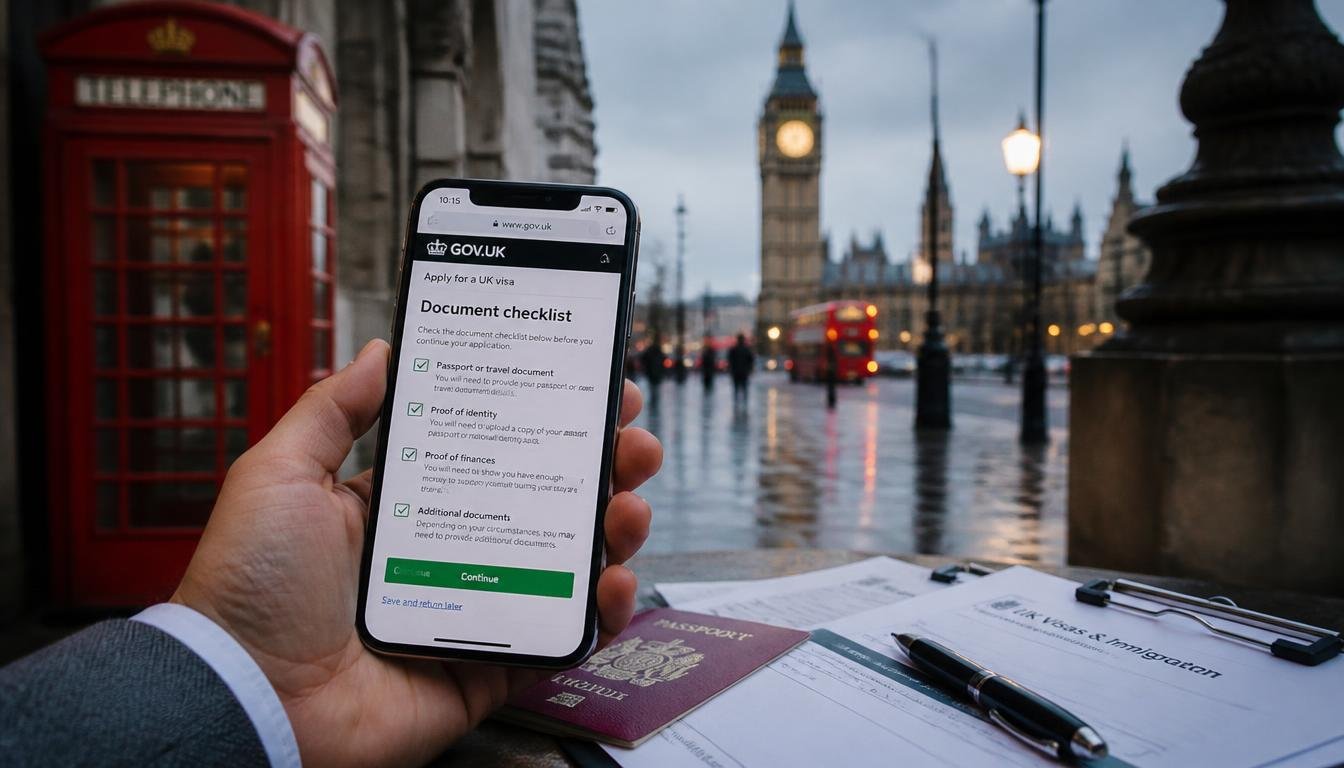
Documents you’ll need as a checklist
- □
Proof of identity (such as a passport or driving licence)
- □
- □
Bank account details for payments
- □
Tenancy agreement or mortgage statement if you pay housing costs
- □
Details of savings and capital
- □
Details of income, including wages, pensions or other benefits
- □
Childcare provider details if you are claiming childcare costs
- □
Details of any health condition that affects your ability to work
If you do not have a bank account, speak to your work coach. They can help you explore options. Do not delay your claim just because you are missing one document; submit what you have and add the rest through your journal as soon as possible. For more on this, see our guide on Universal Credit application problems.
Common mistakes that delay or reduce claims
Leaving gaps in the online form. Missing details about rent, savings or health can cause weeks of delay. If something does not apply, say so clearly rather than leaving it blank.
Not reporting a change of circumstances. You must update your journal if your earnings, housing, family or health changes. Overpayments often happen because a change was not reported promptly.
Assuming the advance is free money. A Universal Credit advance is a loan. It is deducted from future payments. Budget for the reduction.
Missing the 28-day deadline. If you create an online account but do not submit your claim within 28 days, you may need to start again.
Not asking for help with deductions. If repayments for an advance or other debts are making it hard to manage, ask about a repayment delay or a lower deduction rate.
Ignoring journal messages. Your journal is the main way the DWP contacts you. Check it regularly and respond to requests for information.
If your payment is late or wrong, keep copies of journal entries and ask explicitly whether a decision has been made. For a step-by-step guide to challenging a decision, see our article on mandatory reconsideration and appeals.
What happens after you apply?
After you submit your claim, the DWP checks your information and may ask for more evidence. Your first payment is usually made around five weeks after the date you claimed. The exact date will appear in your online account.
Payments are usually made monthly into your bank account. In Scotland and Northern Ireland, you may be able to choose twice-monthly payments instead of one monthly payment.
If you disagree with a decision: You can ask for a mandatory reconsideration within one month of the decision date. The decision letter explains how. If you are still unhappy after the mandatory reconsideration, you can appeal to an independent tribunal. Free advice from Citizens Advice or another independent service can help you decide whether to challenge a decision.
If your payment stops or is reduced: This can happen because of a sanction, a change in earnings, or a failure to provide information. Check your journal for the reason and ask your work coach to explain it. If you have no money for essential costs, ask about a hardship payment. These are recoverable, but they can help in an emergency.
The DWP has been making changes to the health element and work capability rules. Some rates and rules may differ depending on when you claimed. Always check the latest GOV.UK guidance or ask an adviser if your health element is affected. [VERIFY: current rules for new health element claims and any transitional protection].
Related support you might be missing
Universal Credit does not cover every cost. Other support may be available alongside your award.
Council Tax Reduction: Your local council in England may reduce your Council Tax bill based on your income. Apply directly to your council.
Free school meals: From September 2026, Universal Credit is expected to become a passport entitlement to free school meals in England. [VERIFY: exact rollout and eligibility rules with your local authority].
Household Support Fund: Local councils in England may offer crisis support through the Household Support Fund or similar local schemes. Availability varies by area.
Warm Home Discount and energy help: You may be able to get a discount on your electricity bill or help from your supplier if you are on a low income.
Charitable grants: Turn2us and other charities may offer grants for essentials. Citizens Advice can help you find local support.
For a fuller list of help with bills and everyday costs, see our guide on cost of living support for Universal Credit claimants.
Quick summary checklist
- □
Universal Credit in England is claimed online through GOV.UK.
- □
You usually need to be 18 or over and under State Pension age.
- □
Savings over £16,000 usually stop you from getting Universal Credit.
- □
The standard allowance in 2026/27 is £338.58 for a single person under 25 and £424.90 for a single person 25 or over.
- □
Your first payment normally arrives around five weeks after you claim.
- □
An advance is a loan, not a grant.
- □
Report changes of circumstances promptly to avoid overpayments.
FAQs
How long does it take to get Universal Credit in England?
Your first payment usually arrives around five weeks after you submit your claim. You may be able to get an advance if you need money sooner. The advance is repaid from future payments.
Can I get Universal Credit if I have savings?
You usually cannot get Universal Credit if you have savings or capital over £16,000. Between £6,000 and £16,000, your payment is reduced. Some types of capital are ignored, so check the rules for your situation.
How much is Universal Credit for a single person in 2026?
For 2026/27, the standard allowance is £338.58 a month if you are under 25, and £424.90 a month if you are 25 or over. You may get extra elements on top of this.
Does Universal Credit pay my rent in England?
Universal Credit usually includes a housing costs element to help with rent. In England, you are usually responsible for paying your landlord directly from your Universal Credit payment. The amount depends on your local area and rent.
Can I work and still get Universal Credit?
Yes, you can usually work and claim Universal Credit. Your payment reduces as your earnings rise, but a work allowance may protect some of your earnings if you have children or a health condition. The taper rate is 55% above the work allowance.
Conclusion
Universal Credit in England is a monthly means-tested payment claimed online through GOV.UK. The amount depends on your age, housing, children, health and earnings. The 2026/27 standard allowance is £338.58 for a single person under 25 and £424.90 for a single person 25 or over. Extra elements can increase this, but savings over £16,000 usually stop a claim.
The first payment normally arrives around five weeks after you apply, so plan for that gap. An advance can help, but it is a loan that reduces future payments. Report changes promptly, check your journal, and ask for help if a decision seems wrong.
For more detail on related topics, see our guides on Universal Credit payment dates, advance payments, and mandatory reconsideration. Always check GOV.UK or an independent advice service for the latest official information.