
Disclaimer: This is an independent informational website. We are not affiliated with, endorsed by, or connected to the DWP, HMRC, any UK government body or local council. Information is for general guidance only and is not financial or legal advice. Always check GOV.UK for the latest official information.
[LAST CHECKED: 20 October 2026]
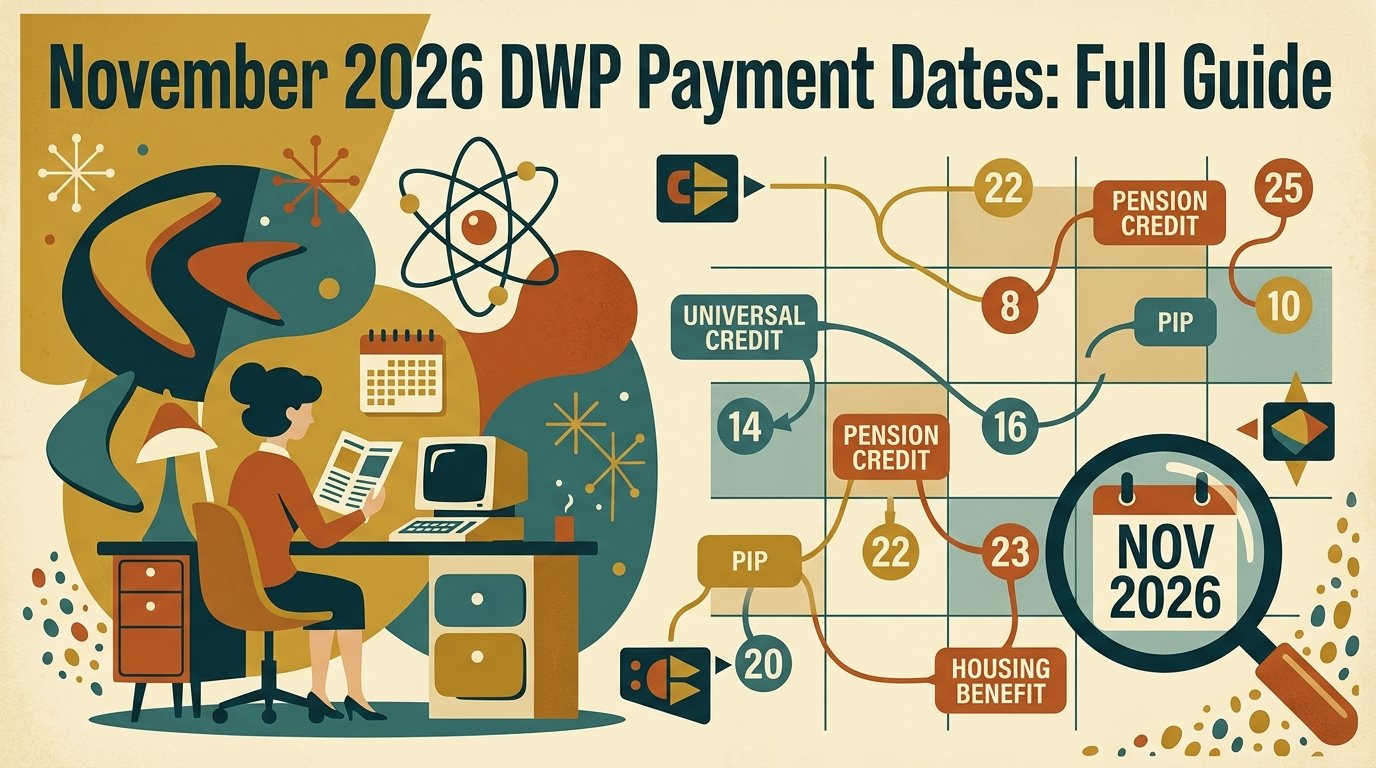
November 2026 DWP Payment Dates: Full Guide
Introduction: What to expect from November 2026 DWP payment dates
If you receive benefits from the Department for Work and Pensions (DWP), you may be wondering when your money will arrive in November 2026. This independent guide explains the November 2026 DWP payment dates, so you can plan ahead. The good news is that November 2026 has no UK-wide bank holidays, so most payments will be made as normal. There is one Scotland-only bank holiday (St Andrew’s Day on 30 November), but this does not affect DWP payment dates because the Bacs system stays open.
Quick answer: Most DWP benefits, including Universal Credit, State Pension, PIP, and Pension Credit, will be paid on their usual dates in November 2026. If your payment date falls on a weekend, you will usually be paid on the last working day before. Always check your award letter or online account for your exact date.
Who can claim? (and who receives payments in November)

You will receive a DWP payment in November 2026 if you are already entitled to one of the following benefits. You do not need to make a new claim just because it is November.
Universal Credit – paid monthly on the same date each month, based on your assessment period.
State Pension – paid every four weeks, usually on a day linked to your National Insurance number.
Pension Credit – paid every four weeks.
Personal Independence Payment (PIP) – paid every four weeks on a set day.
Disability Living Allowance (DLA) – paid every four weeks.
Attendance Allowance – paid every four weeks.
Carer’s Allowance – paid every four weeks.
Employment and Support Allowance (ESA) – paid every two weeks.
Jobseeker’s Allowance (JSA) – paid every two weeks.
Income Support – paid every two weeks.
Child Benefit – paid every four weeks (administered by HMRC, not DWP).
Nation differences: Scotland has a bank holiday for St Andrew’s Day on Monday 30 November 2026. However, this is a Scotland-only holiday and does not shift DWP payment dates, because the Bacs payment system remains open. Payments due on that day will still be made as normal. If you live in England, Wales, or Northern Ireland, there are no bank holidays in November 2026.
How much could you get?

This guide is about payment dates, not amounts. The amount you receive depends on your individual circumstances, your benefit type, and your award letter. Benefit rates can change each April. For confirmed figures, check your latest award letter or the official GOV.UK page for your benefit. If you are unsure, write to the DWP or check your online account.
Pointer: If you are worried about whether your payment amount is correct, see our related guide on [VERIFY: checking your benefit award letter].
How to apply: step by step (only if you are making a new claim)
If you are not yet receiving a benefit and think you may be eligible, you will need to make a claim. The process depends on the benefit.
Check eligibility on GOV.UK for the specific benefit you are considering.
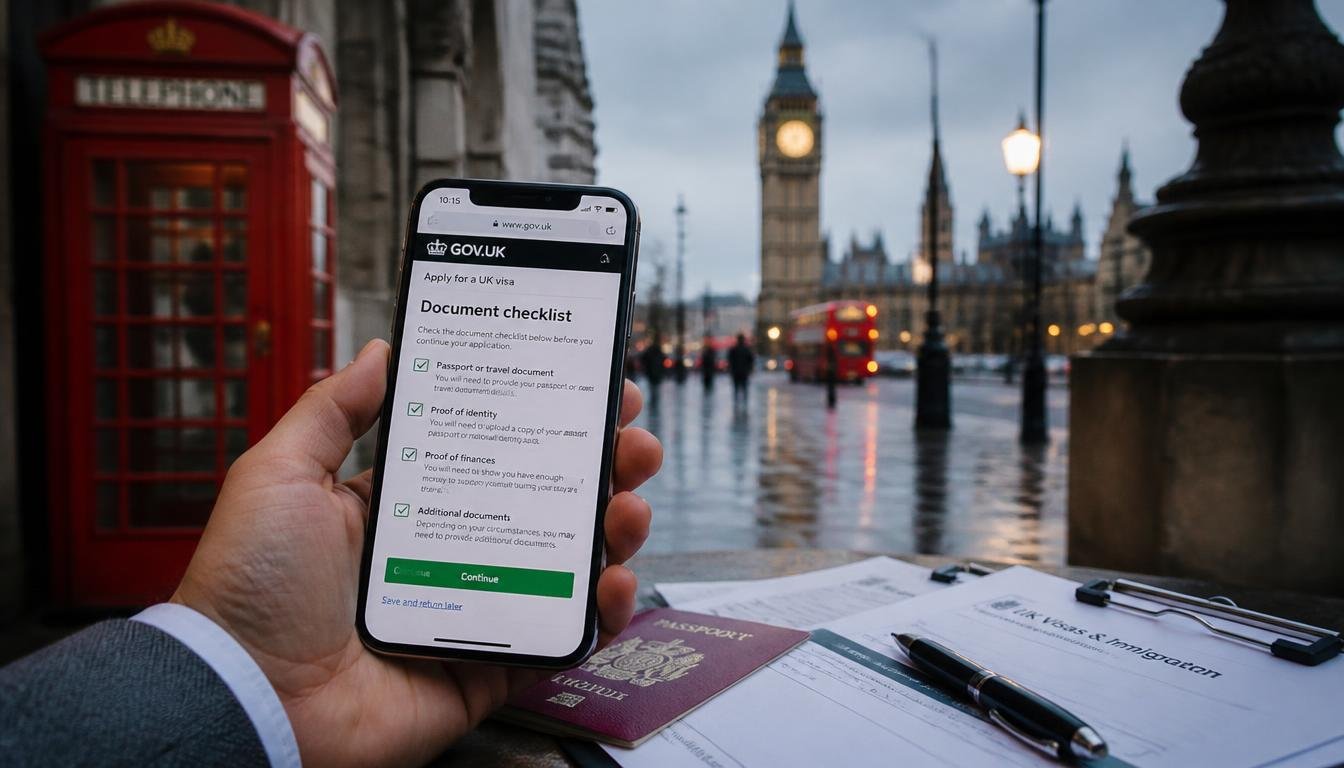
Gather your information (see the checklist below).
Apply online where possible. Universal Credit claims are made online via GOV.UK.
Attend any appointments or interviews requested by the Jobcentre or DWP.
Wait for your decision letter, which will confirm your award and your payment date.
Documents you’ll need as a checklist
Proof of identity (passport, driving licence, or birth certificate).
National Insurance number.
Bank account details (for payments).
Proof of address (recent bill or tenancy agreement).
Details of income, savings, and investments.
Details of any other benefits you receive.
For health-related benefits, medical evidence or reports.
Pointer: For a full walkthrough of claiming Universal Credit, see our related guide on [VERIFY: Universal Credit application steps].
Common mistakes that delay or reduce claims

Even if you are already receiving benefits, small mistakes can cause delays or payment problems. Watch out for these common issues.
Not reporting a change in circumstances. If your address, bank details, or living situation changes, tell the DWP straight away. Delays can lead to overpayments or underpayments.
Missing a assessment period deadline. For Universal Credit, your payment date is fixed after your first assessment period. Missing a journal message or failing to accept your claimant commitment can pause your payment.
Assuming a bank holiday will delay payment. In November 2026, there are no UK-wide bank holidays. Even the Scotland-only St Andrew’s Day does not affect DWP payments. Do not expect a later payment.
Not checking your payment date after a weekend. If your normal payment date falls on a Saturday or Sunday, you will usually be paid on the Friday before. Budget for a longer gap until your next payment.
Ignoring letters or journal messages. The DWP may ask for information to confirm your entitlement. If you do not respond, your payment could be suspended.
Pointer: If your payment has stopped or been reduced, see our guide on [VERIFY: what to do when your benefit payment stops].
What happens after you apply? (timelines, payments, and challenges)
If you have just made a new claim, the timeline varies by benefit.
Universal Credit: Your first payment usually arrives about five weeks after you apply, seven days after the end of your first assessment period. Subsequent payments are monthly on the same date.
State Pension: You will receive your first payment after your pension start date. Payments are every four weeks.
PIP: Your decision letter will tell you the date of your first payment and your usual payday.

What if your payment is late? Wait until the end of your expected payment day. If the money has not arrived, check your online account or journal. If it still has not arrived, contact the DWP helpline for your benefit. Have your National Insurance number ready.
What if you disagree with a decision? You can ask for a mandatory reconsideration within one month of the decision date. If you are still unhappy, you can appeal to an independent tribunal. Always get advice before appealing.
Pointer: For help with a decision you think is wrong, see our guide on [VERIFY: mandatory reconsideration and appeals].
Related support you might be missing
November can bring extra costs, especially for heating. You may be able to get additional support.
Winter Fuel Payment: Most eligible pensioners will be paid in November or December 2026. You should receive a letter in October or November confirming your amount. Payment is automatic if you are eligible.
Cold Weather Payment: The scheme opens on 1 November 2026 and runs until 31 March 2027. You may get £25 for each seven-day period of very cold weather if you receive certain benefits.
Warm Home Discount: You may be able to get £150 off your electricity bill if you meet the criteria. Check with your energy supplier.
Council Tax Reduction: If you are on a low income, you may be able to get help with your council tax. Contact your local council.
Budgeting Advance: If you are on Universal Credit and face an emergency, you may be able to get an interest-free loan. The amount depends on your circumstances.
Pointer: For a full list of winter support, see our related guide on [VERIFY: help with heating costs this winter].
Quick summary checklist
- □
Check your normal payment date in your award letter or online account.
- □
If your payment is due on a weekend, expect it on the last working day before.
- □
There are no UK-wide bank holidays in November 2026.
- □
Scotland’s St Andrew’s Day (30 November) does not delay DWP payments.
- □
Report any change in circumstances to the DWP immediately.
- □
Check if you are eligible for Winter Fuel Payment or Cold Weather Payment.
- □
Keep your bank details up to date.
FAQs
Will my Universal Credit be paid early in November 2026?
Only if your normal payment date falls on a weekend. There are no UK-wide bank holidays in November 2026. If your date is a weekday, it will be paid as normal.
Does St Andrew’s Day affect DWP payments in Scotland?
No. Although 30 November 2026 is a Scotland-only bank holiday, DWP payments are not moved because the Bacs system stays open.
When will Winter Fuel Payment be paid in November 2026?
Most eligible people will be paid in November or December 2026. You should get a letter confirming your amount and payment date.
What if my payment is late in November 2026?
Check your online account first. If it is still missing, contact the DWP helpline for your benefit. Have your National Insurance number ready.
Do I need to claim Cold Weather Payment?
No. Cold Weather Payments are automatic if you are eligible and your area experiences very cold weather between 1 November 2026 and 31 March 2027.
Conclusion
November 2026 is a straightforward month for DWP payments. With no UK-wide bank holidays, most benefits will be paid on their usual dates. The only potential adjustment is for payments due on a weekend, which are usually paid earlier. Scotland’s St Andrew’s Day does not affect DWP payments. Use this guide to check your November 2026 DWP payment dates, and make sure you are not missing out on Winter Fuel Payment or Cold Weather Payment. For more help, explore our related guides on Universal Credit, Pension Credit, and help with heating costs.