
Disclaimer: This is an independent informational website. We are not affiliated with, endorsed by, or connected to the DWP, HMRC, any UK government body or local council. Information is for general guidance only and is not financial or legal advice. Always check GOV.UK for the latest official information.
[LAST CHECKED: 20 October 2026]
How to Apply for Council Tax Reduction 2026
Introduction: Your independent guide to Council Tax Reduction applications
If your council tax bill feels like a stretch, you are not alone. Millions of people across the UK may be able to get money off through Council Tax Reduction (sometimes called Council Tax Support). This independent guide walks you through how to apply for Council Tax Reduction in 2026, step by step, so you know what to expect and what to prepare. The rules differ depending on where you live and whether you are of working age or pension age, so it is important to apply through the right route for your circumstances.
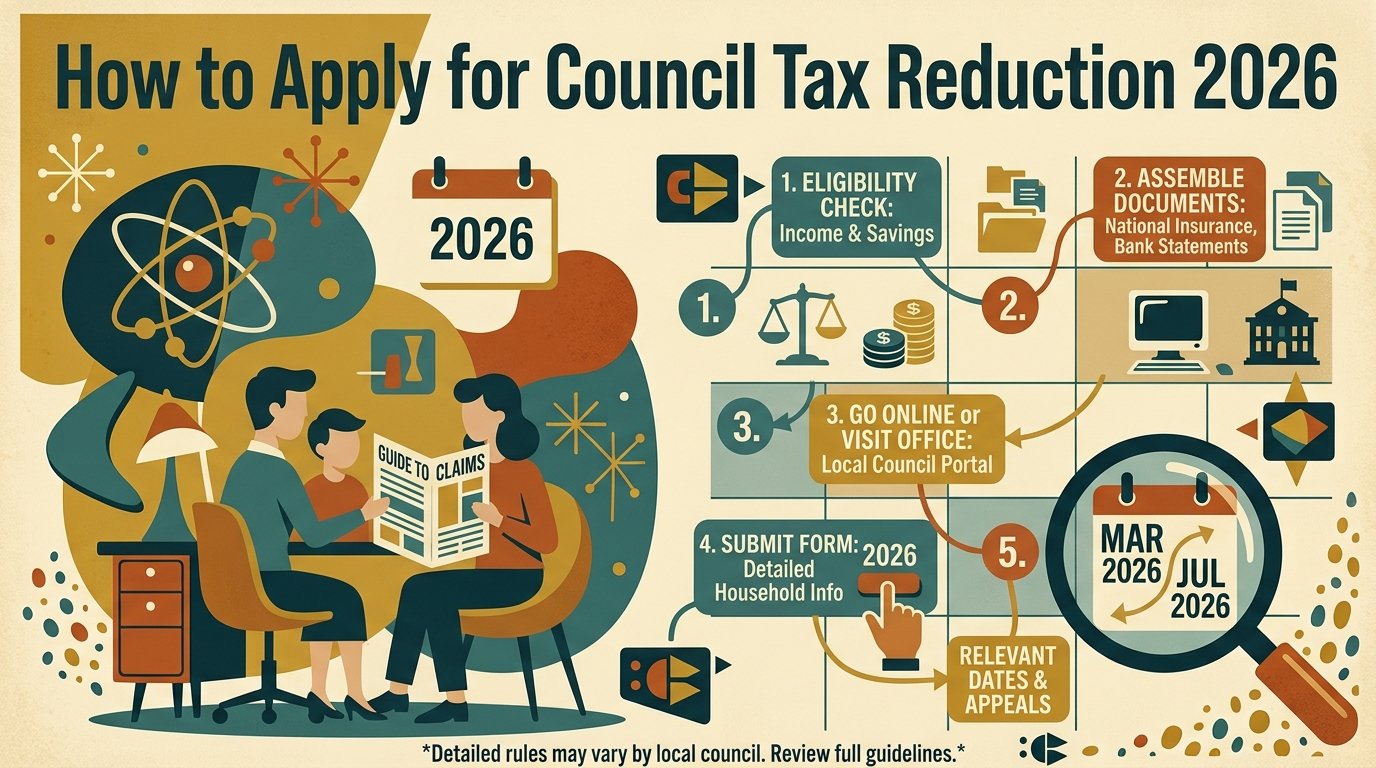
Quick answer: You apply for Council Tax Reduction through your local council, not the DWP. Most councils let you apply online in around 15 to 30 minutes. You will need your National Insurance number, details of your income and savings, and information about everyone in your household. Working-age claims are assessed under each council’s local scheme, while pension-age claims follow national rules.
Who can claim? (and how the rules differ across the UK)

You may be able to claim Council Tax Reduction if you are liable to pay council tax on your home and you are on a low income. You do not need to be out of work to qualify. You can claim whether you are working, unemployed, disabled, single, married, or raising children.
You must be the person responsible for paying the council tax at your address.
You usually need to be aged 18 or over, though there are limited exceptions.
Your savings and capital are taken into account. As a general rule, you will not usually qualify if you have capital over £16,000, unless you receive Pension Credit Guarantee or fall under special rules.
Full-time students are usually excluded, unless they fall within a vulnerable group such as single parents, disabled students, or pensioners.
Nation differences are important here. In England, each council runs its own Council Tax Reduction scheme for working-age claimants, so the maximum reduction and income rules vary from area to area. In Scotland, Council Tax Reduction is administered by councils under Scottish Government rules, and water and sewerage charges are not covered by the reduction. In Wales, the Welsh Government sets a national framework, and eligible claimants can receive up to 100% reduction depending on their income and household circumstances. In Northern Ireland, there is no Council Tax. Instead, there is a separate Rate Rebate scheme for working-age people receiving Universal Credit, administered by Land & Property Services (LPS). Pensioners in Northern Ireland are usually covered by Housing Benefit or Low Income Rate Relief instead.
Pointer: If you are of pension age, our guide on [VERIFY: Pension Credit and Council Tax Reduction] explains how the national pension-age rules apply.
How much could you get?

There is no single national figure for Council Tax Reduction, because the amount depends on your council, your income, your savings, and who lives with you. Confirmed figures for 2026/27 vary widely by local authority.
Pension-age claimants can usually get up to 100% reduction under national rules, depending on income and savings.
Working-age claimants in England are usually capped at a percentage set by their local council. Some councils offer up to 100%, while others cap support lower. For example, some London councils have set working-age maximums around 70% to 90%, and one council has confirmed a 70% cap from April 2026.
In Wales, the national framework allows reductions of up to 100% of the council tax bill, depending on income and household circumstances.
In Scotland, up to 100% reduction of the council tax charge may be available after discounts and non-dependant deductions, though water and sewerage charges are excluded.
Because these figures are set locally and can change each April, you should always check your own council’s scheme for the exact maximum in your area. Do not rely on another council’s figures.
Pointer: Use a free, independent benefits calculator to estimate your likely reduction before you apply. Our guide on [VERIFY: using a benefits calculator] explains how they work.
How to apply for Council Tax Reduction: step by step

The application process is managed by your local council, not by the DWP. You do not receive Council Tax Reduction automatically, even if you receive Universal Credit or Pension Credit. You must make a separate claim.
Find your local council’s Council Tax Reduction page. The quickest way is to search GOV.UK for “apply for council tax reduction” and enter your postcode. GOV.UK will redirect you to the correct application page for your council.
Check whether you need the working-age or pension-age route. If you and your partner have reached State Pension age, you will usually follow the national pension-age rules. If you are of working age, your council’s local scheme applies.
Complete the online application form. Most councils offer an online form, which is usually the fastest route. Some councils also allow you to request a paper form by phone or post.
Upload or send your supporting evidence. Your council will tell you what proof it needs. You can often upload documents online, but some councils allow you to send copies later if you do not have everything ready straight away. Send the form in quickly even if evidence is missing, because the date you apply can affect when your reduction starts.
Respond to any requests for more information. Your council may contact you if something is unclear or missing. Reply promptly to avoid delays.
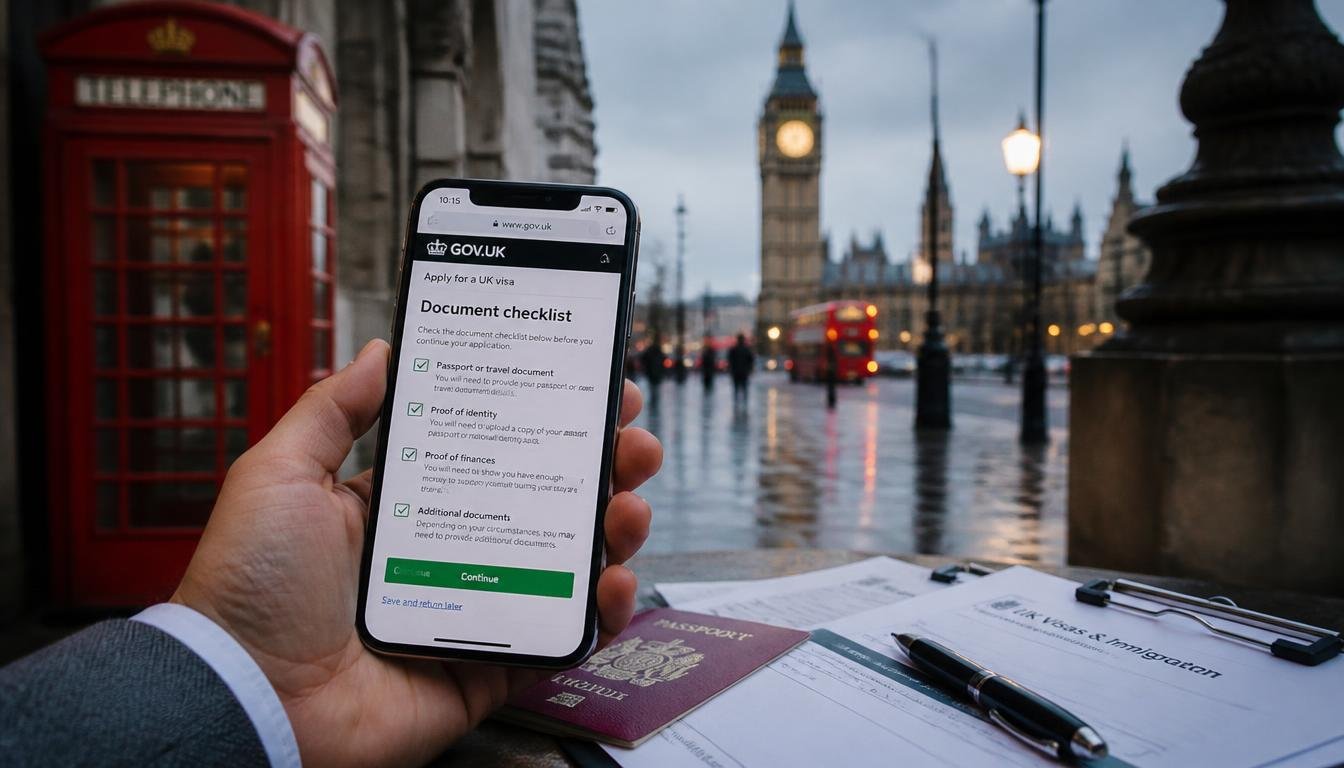
Documents you’ll need as a checklist
- □
National Insurance numbers for you and your partner (if you have one).
- □
Proof of identity for you and your partner, such as a passport or driving licence.
- □
Proof of your address, such as a recent bill or tenancy agreement.
- □
Details of your income, including wages, benefits, pensions, and any other money coming in.
- □
Details of your savings and capital, including bank statements, ISAs, and investments.
- □
Details of everyone in your household, including partners, children, lodgers, and other adults.
- □
Your council tax account number or a copy of your council tax bill.
- □
Medical evidence if you are applying on health grounds (where relevant).
Pointer: If you are unsure what counts as income or capital, our guide on [VERIFY: what counts as income for Council Tax Reduction] breaks it down.
Common mistakes that delay or reduce claims
Many applications are delayed or awarded at a lower amount because of avoidable errors. Watch out for these common traps.
Assuming you are automatically covered because you get Universal Credit or Pension Credit. You are not. You must make a separate Council Tax Reduction claim to your council.
Confusing a discount with a reduction. A discount, such as the 25% single-person discount, is separate from Council Tax Reduction. You may be able to get both, so do not assume a discount means you cannot claim reduction.
Leaving out household members. You must declare everyone who lives with you, including adult children, lodgers, and friends. Missing someone can lead to an incorrect award or a later overpayment.
Not reporting changes promptly. If your income, address, or household changes, tell your council straight away. Delays can lead to overpayments that you may have to repay.
Applying late and expecting full backdating. Backdating rules vary. In Scotland, for example, Council Tax Reduction can usually be backdated for up to six months if you have good cause for not applying earlier, but simply not knowing you could claim is not usually accepted as a good reason.
Pointer: If your circumstances have changed, our guide on [VERIFY: reporting changes to your council] explains what to update and when.
What happens after you apply?

Once your council receives your application, it will assess your income, savings, and household circumstances. Timelines vary by council, but many aim to process claims within a few weeks. Some councils, for example, aim to process applications within four weeks, and you may be asked to provide proof within 14 days of applying.
If you qualify, your reduction is usually applied directly to your council tax account, which lowers the amount you need to pay. You will normally receive a revised council tax bill showing the reduction. In some cases, the reduction may start from the week after the council receives your claim.
If you disagree with the decision, you can usually ask your council for a reconsideration or explanation first. If you are still unhappy, you may be able to appeal. Appeal routes differ by nation. In England and Wales, you can usually appeal to a valuation tribunal; in Scotland, there is a separate review process. Always ask your council for the specific appeal route and deadline, as time limits apply.
Pointer: For a step-by-step guide to challenging a decision, see our article on [VERIFY: appealing a Council Tax Reduction decision].
Related support you might be missing
Council Tax Reduction is one form of help, but you may be able to get other support alongside it.
Single-person discount: If you live alone, you may be able to get 25% off your council tax bill. This is separate from Council Tax Reduction and can be claimed alongside it.
Second Adult Rebate: If you share your home with another adult who is not your partner and is on a low income, you may be able to get a Second Adult Rebate of up to 25% (or more in some Scottish schemes). This is based on the other adult’s income, not yours.
Discretionary Housing Payment: If you receive Housing Benefit or the housing element of Universal Credit and need extra help with rent or certain housing costs, you may be able to get a discretionary payment from your council.
Warm Home Discount and Cold Weather Payment: If you are on a low income or certain benefits, you may be able to get help with energy costs during colder months.
Council tax disability reduction: If you or someone you live with is disabled and your home has certain features, such as an extra bathroom or a room used mainly for medical needs, you may be able to move to a lower council tax band.
Pointer: For a wider list of help with living costs, see our guide on [VERIFY: cost of living support you may be missing].
Quick summary checklist
- □
Check whether you are working age or pension age, because the application route differs.
- □
Find your council’s Council Tax Reduction page via GOV.UK using your postcode.
- □
Gather your National Insurance number, income details, savings evidence, and household information.
- □
Submit your application online if possible, and send evidence promptly.
- □
Declare everyone in your household, including lodgers and adult children.
- □
Report any change in circumstances to your council straight away.
- □
Check whether you can also claim a single-person discount or Second Adult Rebate.
FAQs
Do I need to be on benefits to apply for Council Tax Reduction?
No. You do not need to be receiving Universal Credit or any other benefit. You may be able to get Council Tax Reduction if you are on a low income, whether you are working or not.
Can I apply for Council Tax Reduction if I have savings?
You may still qualify if your savings are below the capital limit, which is usually £16,000 for most claimants. Some pension-age claimants who receive Pension Credit Guarantee may qualify even with savings above that limit.
How long does a Council Tax Reduction application take?
Timelines vary by council, but many aim to process claims within a few weeks. Some councils aim for four weeks, and you may need to provide evidence within 14 days of applying.
What if my circumstances change after I apply?
You must tell your council as soon as possible. Changes to your income, address, or household can affect the amount of reduction you get, and reporting them promptly helps avoid overpayments.
Is Council Tax Reduction the same as a council tax discount?
No. A discount, such as the 25% single-person discount, reduces your bill based on your household. Council Tax Reduction is a separate means-tested benefit based on your income and savings. You may be able to get both.
Conclusion
Applying for Council Tax Reduction is simpler when you know the right route. In England, Scotland, and Wales, you apply through your local council, and working-age claims follow local or national schemes that can vary by area. In Northern Ireland, working-age claimants on Universal Credit apply separately for Rate Rebate through Land & Property Services. The key steps are the same: check your eligibility, gather your evidence, apply online where possible, and report any changes promptly. Do not assume you are automatically covered because you receive another benefit. If you are struggling with your bill, it is worth checking whether you qualify. For more help, explore our related guides on [VERIFY: council tax discounts] and [VERIFY: help with rent and housing costs].