
Disclaimer: This is an independent informational website. We are not affiliated with, endorsed by, or connected to the DWP, HMRC, any UK government body or local council. Information is for general guidance only and is not financial or legal advice. Always check GOV.UK for the latest official information.
[LAST CHECKED: 20 October 2026]
Housing Benefit Eligibility 2026: Who Can Claim?
Introduction: Your independent guide to Housing Benefit eligibility
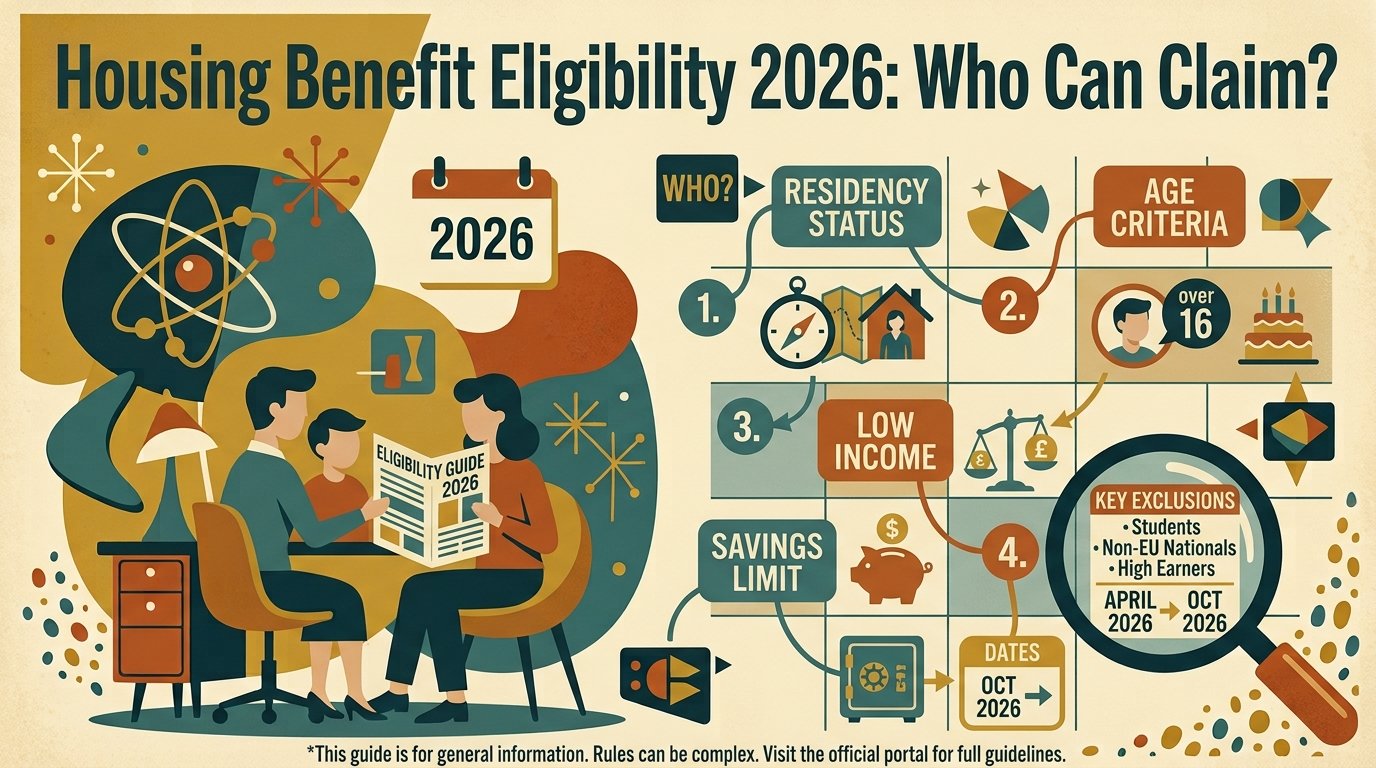
Housing Benefit rules changed significantly in 2026, and many people are unsure whether they can still claim. This independent guide explains housing benefit eligibility clearly, so you know whether a new claim is possible and what to do if it is not. The short version is that Housing Benefit is now largely a benefit for people over State Pension age, plus some people in temporary or supported housing. If you are of working age and renting privately or socially, Universal Credit is usually the route for help with rent.
Quick answer: You can usually make a new claim for Housing Benefit in 2026 if you have reached State Pension age, or if you live in temporary or supported accommodation (any age). You must be liable to pay rent and have capital under £16,000, unless you receive Guarantee Pension Credit. Most working-age renters now need to claim Universal Credit instead.
Who can claim Housing Benefit? (and who cannot)

You may be able to claim Housing Benefit if you meet the basic conditions and fall into one of the groups that can still make a new claim. The rules are strict, and since 1 July 2026 most working-age people can no longer make a new claim for Housing Benefit.
You have reached State Pension age. This is the main route for new claims. If you have a partner, you usually both need to have reached State Pension age to claim as a couple.
You live in temporary accommodation. If you are homeless and the council has placed you in temporary accommodation, you can usually claim Housing Benefit regardless of your age.
You live in supported or sheltered accommodation. If your home provides extra support, you may be able to claim Housing Benefit even if you are under State Pension age.
You are already receiving Housing Benefit and your circumstances change. Existing awards can sometimes continue in specific situations, but new claims are limited.
You must also be liable to pay rent on your home, have a low income, and have capital and savings under £16,000 (unless you get Guarantee Pension Credit, which removes the upper capital limit). You usually need to be habitually resident in the UK and have a right to reside and immigration status that allows you to claim public funds.

Nation differences: In Scotland and Wales, Housing Benefit is administered by local councils under largely the same DWP rules, but devolved support and Discretionary Housing Payments can differ. In Northern Ireland, Housing Benefit is administered by the Northern Ireland Housing Executive rather than local councils, and there is a separate mitigation scheme for the spare room subsidy.
Pointer: If you are of working age and need help with rent, our guide on [VERIFY: Universal Credit housing element] explains the alternative route.
How much could you get?
There is no single figure, because Housing Benefit is means-tested and capped by Local Housing Allowance (LHA) rates for private renters. For 2026/27, LHA rates have been frozen at their April 2024 levels, meaning they have not been increased. This can affect how much help you get towards rent.
Private renters usually have their Housing Benefit calculated using the LHA rate for the area and the number of bedrooms you need. If your rent is higher than the LHA rate, you will usually need to pay the difference.
Social renters may have their benefit calculated on the actual rent, but deductions can apply for spare bedrooms (the spare room subsidy or “bedroom tax”). In Northern Ireland, a mitigation scheme offsets this for most affected people.
Pension-age claimants may get more generous treatment, and Guarantee Pension Credit can remove the upper capital limit entirely.

Because LHA rates vary by area and are frozen, you should check your local council’s LHA figures or use a benefits calculator before applying.
Pointer: For help understanding LHA rates in your area, see our guide on [VERIFY: Local Housing Allowance explained].
How to apply for Housing Benefit: step by step
You apply through your local council, not the DWP. Even if you receive Pension Credit, you still need to make a separate Housing Benefit claim.
Check that you can make a new claim. Use the eligibility rules above. If you are of working age and not in temporary or supported housing, you will usually need to claim Universal Credit instead.
Find your council’s Housing Benefit page. Search GOV.UK for “Housing Benefit” and enter your postcode, or go directly to your council’s website.
Complete the application form. Most councils offer an online form. Some allow you to download a paper form or request one by phone.
Send your supporting evidence as soon as possible. You do not need to wait until you have every document. Send the form first, then supply evidence promptly, because the date you apply can affect when your benefit starts.
Respond quickly to any requests for information. If the council asks for more details, reply as soon as you can to avoid delays.
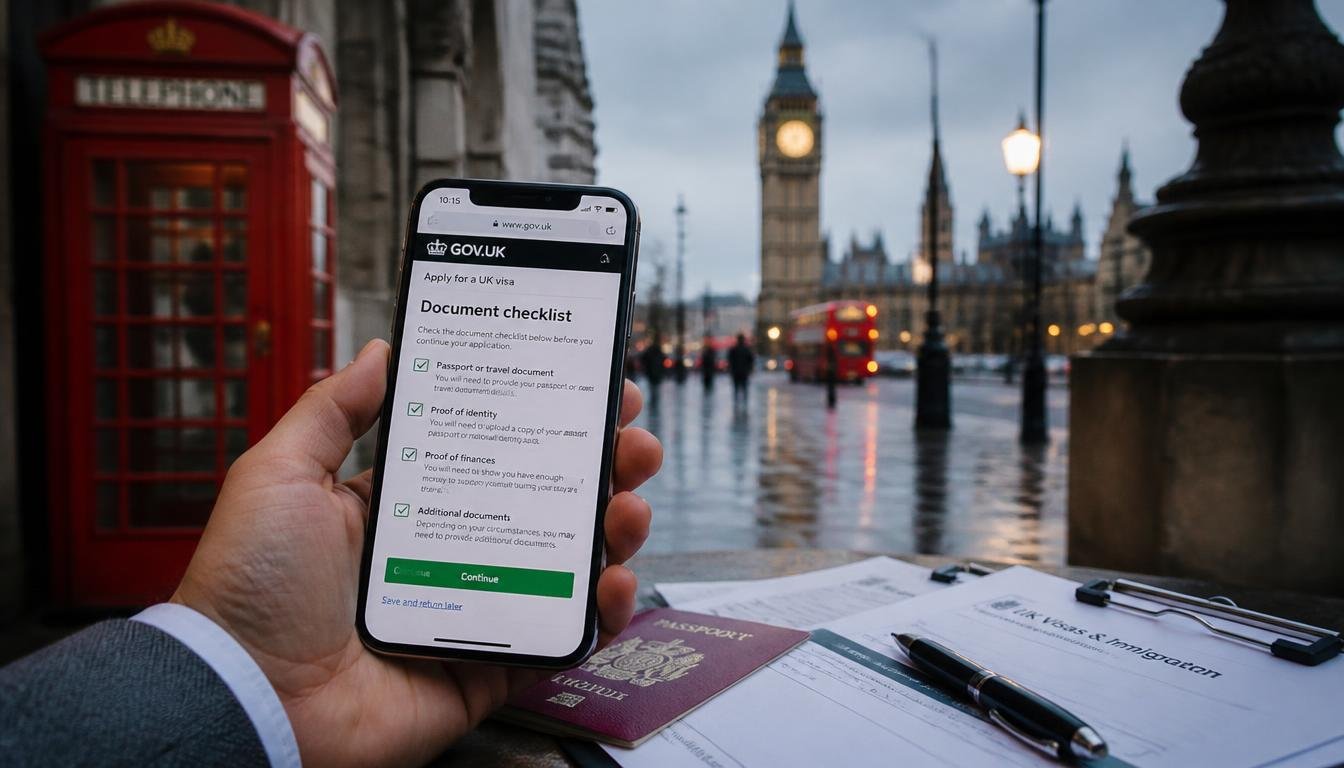
Documents you’ll need as a checklist
- □
Proof of identity (passport, driving licence, or birth certificate) for you and your partner.
- □
National Insurance numbers for you and your partner.
- □
Proof of rent (tenancy agreement or rent book).
- □
Proof of address (recent bill or bank statement).
- □
Details of income (wages, benefits, pensions, and any other money coming in).
- □
Proof of savings and capital (bank statements, ISAs, investments).
- □
Details of everyone in your household (partner, children, lodgers, adult relatives).
- □
Immigration or right to reside documents if you are not a UK or Irish citizen.
Pointer: If you are unsure what evidence counts, our guide on [VERIFY: documents for a Housing Benefit claim] explains more.
Common mistakes that delay or reduce claims

These common errors can slow down your claim or lead to a lower award.
Assuming you can claim because you get Pension Credit. Pension Credit does not automatically pay your rent. You must still make a separate Housing Benefit claim.
Claiming Universal Credit when you are eligible for Housing Benefit. If you are of State Pension age, claiming Universal Credit for housing costs can be the wrong route. Check before you apply.
Not declaring everyone in your household. Adult children, lodgers, and subtenants can affect your benefit. Leaving someone out can lead to an incorrect award or a later overpayment.
Waiting until you have every document before applying. The date you first contact the council can affect when your benefit starts. Apply first, then send evidence.
Not reporting changes. If your income, rent, or household changes, tell the council straight away. Late reporting can create overpayments you may have to repay.
Pointer: If your circumstances have changed, see our guide on [VERIFY: reporting changes to your council].
What happens after you apply?
Your council will assess your income, capital, and household circumstances. Timelines vary by council, but many aim to process claims within a few weeks. The date your benefit starts is usually linked to the Monday following your date of first contact with the council, so applying promptly matters.
If you qualify, Housing Benefit is usually paid directly to your landlord, or to you in some cases, depending on your circumstances and the council’s rules. You will receive a decision letter explaining the amount and payment arrangements.
If you disagree with the decision, you can usually ask the council for a reconsideration first. If you are still unhappy, you may be able to appeal. Appeal routes differ by nation, and strict time limits apply. Always ask your council for the specific appeal process and deadline.
Pointer: For step-by-step help challenging a decision, see our article on [VERIFY: appealing a Housing Benefit decision].
Related support you might be missing
Housing Benefit is one form of help, but you may be able to get other support alongside it.
Discretionary Housing Payment (DHP): If you receive Housing Benefit or the housing element of Universal Credit and need extra help with rent, you may be able to get a DHP from your council.
Council Tax Reduction: If you are on a low income, you may be able to get money off your council tax bill. This is separate from Housing Benefit.
Pension Credit: If you are over State Pension age and on a low income, Pension Credit can top up your income and may remove the Housing Benefit capital limit.
Warm Home Discount and Cold Weather Payment: You may be able to get help with energy costs during colder months if you receive certain benefits.
Pointer: For a wider list of help, see our guide on [VERIFY: cost of living support you may be missing].
Quick summary checklist
- □
Check whether you have reached State Pension age or live in temporary or supported accommodation.
- □
Confirm your capital is under £16,000, or that you get Guarantee Pension Credit.
- □
Apply through your local council, not the DWP.
- □
Submit the form first and send evidence as soon as possible.
- □
Declare everyone in your household.
- □
Report any change in circumstances immediately.
- □
Ask about Discretionary Housing Payment if your benefit does not cover your rent.
FAQs
Can I make a new Housing Benefit claim if I am of working age?
Usually no. Since 1 July 2026, most working-age people can only make a new claim if they live in temporary or supported accommodation. Otherwise, you will need to claim Universal Credit for help with rent.
What is the capital limit for Housing Benefit in 2026?
The upper capital limit is usually £16,000. If you have savings above this, you will not usually qualify, unless you receive Guarantee Pension Credit, which removes the upper limit.
Does Housing Benefit cover a mortgage?
No. Housing Benefit helps with rent, not mortgage payments. If you are a homeowner, you may be able to get Support for Mortgage Interest (SMI) instead.
Can I get Housing Benefit if I live in supported accommodation?
You may be able to, even if you are under State Pension age. Supported, sheltered, and temporary accommodation are exceptions to the working-age restrictions.
How long does a Housing Benefit claim take?
Timelines vary by council, but many aim to process claims within a few weeks. Your benefit may start from the Monday after your first contact with the council, so apply as soon as you can.
Conclusion
Housing Benefit eligibility in 2026 is narrower than it used to be. New claims are usually limited to people who have reached State Pension age, or who live in temporary or supported accommodation. If you are of working age and renting, Universal Credit is usually the correct route for help with housing costs. Check the capital rules, gather your evidence, and apply through your local council if you are eligible. For more help, explore our related guides on [VERIFY: Universal Credit housing element] and [VERIFY: Discretionary Housing Payments].