
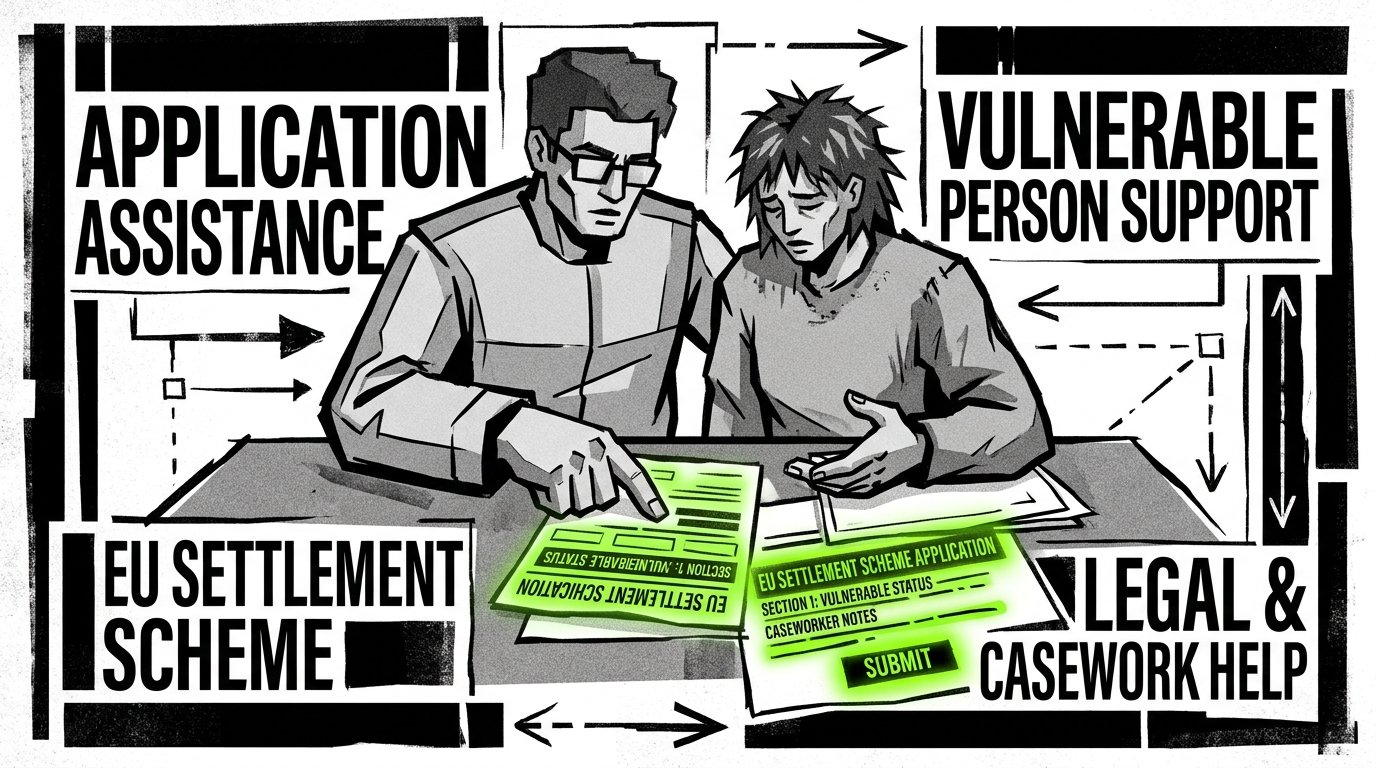
EU Settlement Scheme Application Help for Vulnerable People: Your Complete Guide
Disclaimer: This is an independent informational portal. We are not affiliated with, endorsed by, or connected to any UK government body, council, or the Home Office. All information is provided for guidance purposes only. Always check the official GOV.UK website for the most up-to-date and legally binding information.
Introduction
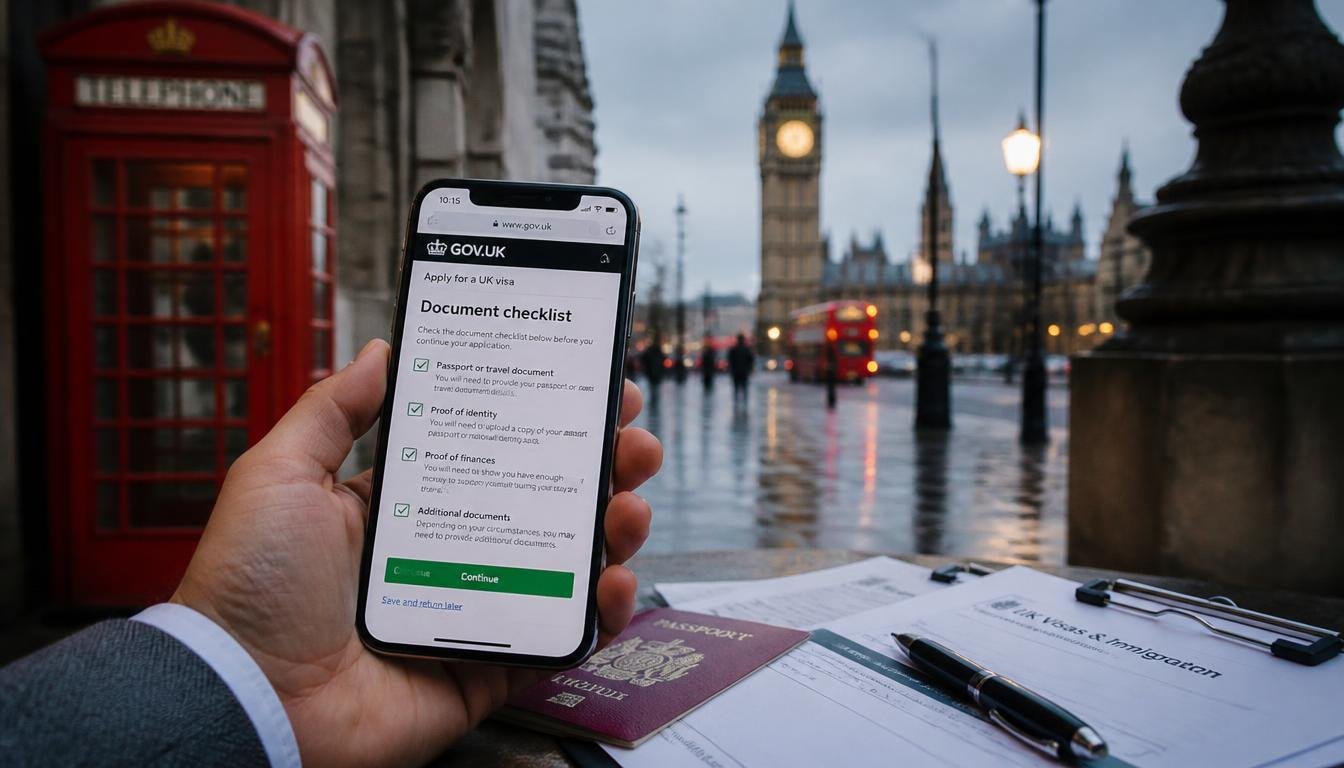
If you or someone you care for is applying to the EU Settlement Scheme and faces additional challenges due to vulnerability, you are not alone. Thousands of people across the UK navigate this process while dealing with illness, disability, trauma, or other difficult circumstances. This guide provides clear, practical EU Settlement Scheme application help for vulnerable people, walking you through available support, the application process, and key things to watch out for.
The EU Settlement Scheme (EUSS) was created for EU, EEA, and Swiss citizens (and their family members) who were living in the UK before 31 December 2020. While the deadline for most applications has passed, there are still circumstances where vulnerable people need to apply, amend an application, or seek help with a refused case. This article focuses on how to get the right support if you are in a vulnerable situation.

We understand that official processes can feel overwhelming. Our aim is to make things clearer and less stressful, pointing you towards genuine help and explaining what to expect.
Who Counts as Vulnerable in the EU Settlement Scheme Context?
The Home Office recognises that some applicants may need extra support. While “vulnerable” is not a single legal definition, it generally includes people who:
Have a physical or mental health condition that affects their ability to complete an application independently
Are elderly and isolated, with no family or community support
Have learning difficulties or cognitive impairments
Are victims of trafficking, modern slavery, or domestic abuse
Are homeless or in unstable housing situations
Are children in care or care leavers
Have limited English literacy or digital skills
Are care experienced young people
Face language barriers that make understanding official guidance difficult

If any of these describe you or someone you are helping, there is specific support available. You do not have to manage this alone.
What Help Is Available for Vulnerable Applicants?
Several organisations and services exist specifically to help vulnerable people with their EU Settlement Scheme applications. These include:
1. Home Office Vulnerable Persons Team
The Home Office has a dedicated team that can provide additional assistance. They can offer:
Extra time to complete applications
Help with digital applications over the phone
Home visits in exceptional circumstances
Support for those without internet access or digital devices
You can ask to be referred to this team when you contact the EU Settlement Scheme Resolution Centre.
2. Grant-Funded Organisations

The Home Office funds a network of charities and community organisations across the UK to provide free application support. These include:
Citizens Advice bureaus in England and Wales
Scottish Citizens Advice and Citizens Advice Scotland
Law Centres and immigration advice services
Refugee and migrant support charities such as the Refugee Council
Local council-run services in some areas
These organisations can help with form-filling, document gathering, and submitting applications. Many offer appointments by phone, video call, or in person.
3. Immigration Advisers and Solicitors
For complex cases, you may need regulated immigration advice. Only advisers registered with the Office of the Immigration Services Commissioner (OISC) or solicitors regulated by the Solicitors Regulation Authority (SRA) can give immigration advice legally.
Warning: Never pay for immigration advice from someone who is not properly regulated. This is illegal and could put your application at risk.
4. Local Authority Support
Some councils have dedicated teams helping vulnerable residents with EUSS applications. Contact your local council’s migration or refugee support team to ask what is available in your area. You can find your local council by entering your postcode on the GOV.UK website.
For a full breakdown of which organisations operate in your region, read our guide on [UK visa support services by region].
Step-by-Step: Getting Help with Your Application
If you are vulnerable and need assistance, follow these steps:
Step 1: Identify Your Needs
Before seeking help, think about what you specifically need. Is it:
Help understanding the requirements?
Assistance gathering documents?
Support completing the online form?
Someone to speak on your behalf?
Help after a refusal or complication?
Knowing this will help you ask for the right kind of support.
Step 2: Contact the EU Settlement Scheme Resolution Centre
The Resolution Centre can be reached on 0300 123 7379 (from inside the UK) or +44 (0)203 080 0010 (from outside the UK). Lines are open Monday to Friday, 8am to 8pm, and Saturday and Sunday, 9:30am to 4:30pm.
When you call, explain that you are vulnerable and need additional support. Ask to be referred to the Vulnerable Persons Team if appropriate.
Step 3: Reach Out to a Local Support Organisation
Use the following resources to find help near you:
Citizens Advice: Visit citizensadvice.org.uk or call 0800 144 8848 (England) or 0800 702 2020 (Wales)
Scottish Citizens Advice: Visit cas.org.uk
Refugee Council: Visit refugeecouncil.org.uk
Local council: Search “[your council name] EU Settlement Scheme support”
Many organisations offer free, confidential appointments. Some can come to your home if you cannot travel.
Step 4: Gather Your Documents
You will typically need:
Proof of identity: Passport or national ID card
Proof of residence in the UK: This can include payslips, bank statements, utility bills, tenancy agreements, or letters from the NHS or DWP
Proof of relationship (for family members): Marriage certificate, birth certificate, or civil partnership certificate
Any relevant medical or care evidence if you are applying as a vulnerable person
If you cannot provide certain documents, explain why. The Home Office can sometimes accept alternative evidence.
Step 5: Complete and Submit the Application
If you have support, your adviser can help you complete the online form. If you cannot use a computer or smartphone, the Home Office can arrange for a paper application in exceptional circumstances.
Once submitted, you will receive a confirmation email. Keep this safe.
Step 6: Track Your Application
Processing times vary. Most applications are decided within 5 working days if you use the EU Exit: ID Document Check app, or within 8 weeks if you need to send documents by post. However, complex cases can take longer.
If your circumstances change (for example, your health deteriorates), inform the Home Office as soon as possible.
For more detail on what happens after you apply, read our article on [EUSS processing times and what to expect].
Common Challenges for Vulnerable Applicants
Vulnerable people often face specific hurdles. These include:
Digital exclusion: Not having a smartphone, computer, or internet access
Language barriers: Difficulty understanding English-language guidance
Lack of documentation: Especially for those who have experienced trauma or instability
Health issues: Making it difficult to attend appointments or complete tasks
Fear of authority: Particularly for victims of trafficking or abuse
Changes in circumstances: Such as moving into care or fleeing domestic abuse
If any of these apply to you, make sure the organisation helping you is aware. They can adapt their support accordingly.
Checklist: Quick Reference for Vulnerable Applicants
Use this checklist to make sure you have covered the essentials:
- □
Confirmed you need to apply to the EU Settlement Scheme
- □
Identified what type of help you need
- □
Contacted the EU Settlement Scheme Resolution Centre (if needed)
- □
Found a local support organisation or regulated adviser
- □
Gathered identity and residence documents
- □
Informed the Home Office of any vulnerability
- □
Completed and submitted the application
- □
Saved confirmation of submission
- □
Noted processing times and follow-up dates
- □
Sought help if you have not received a decision within expected timescales
Important: Keep copies of everything you send. If you are working with an adviser, ask them to keep records too.
Frequently Asked Questions
1. Can I apply to the EU Settlement Scheme if I am vulnerable and missed the deadline?
Yes, in some circumstances. The Home Office can accept late applications if there are reasonable grounds, including vulnerability. You should explain your situation clearly and provide any supporting evidence.
2. Is there a fee for the EU Settlement Scheme?
No, the EU Settlement Scheme is free to apply. However, if you use a solicitor or adviser, they may charge for their services. Always ask about fees upfront.
3. Can someone apply on my behalf?
Yes, if you lack the mental capacity to apply yourself, a responsible adult or legal representative can apply on your behalf. You may need to provide evidence of your situation.
4. What if I do not have a passport or ID?
The Home Office can sometimes accept alternative evidence if you cannot provide a passport or national ID card. Contact the Resolution Centre to discuss your options.
5. How long does a vulnerable person’s application take?
There is no fixed time. Simple applications may be decided in weeks, but complex or vulnerable cases can take several months. The Home Office should keep you informed.
6. What can I do if my application is refused?
You may be able to apply for an administrative review or appeal, depending on your circumstances. Seek regulated immigration advice immediately if you receive a refusal.
Conclusion
Navigating the EU Settlement Scheme can feel daunting, especially when you are dealing with vulnerability. But help is available. From the Home Office’s Vulnerable Persons Team to local charities and regulated advisers, there are people ready to support you through every step.
Remember: you do not have to do this alone. Reach out, ask questions, and take your time. The most important thing is to get the right help and submit the best application you can.
For more guides on UK immigration and support services, explore our website. We are here to help you understand the process, one step at a time.