
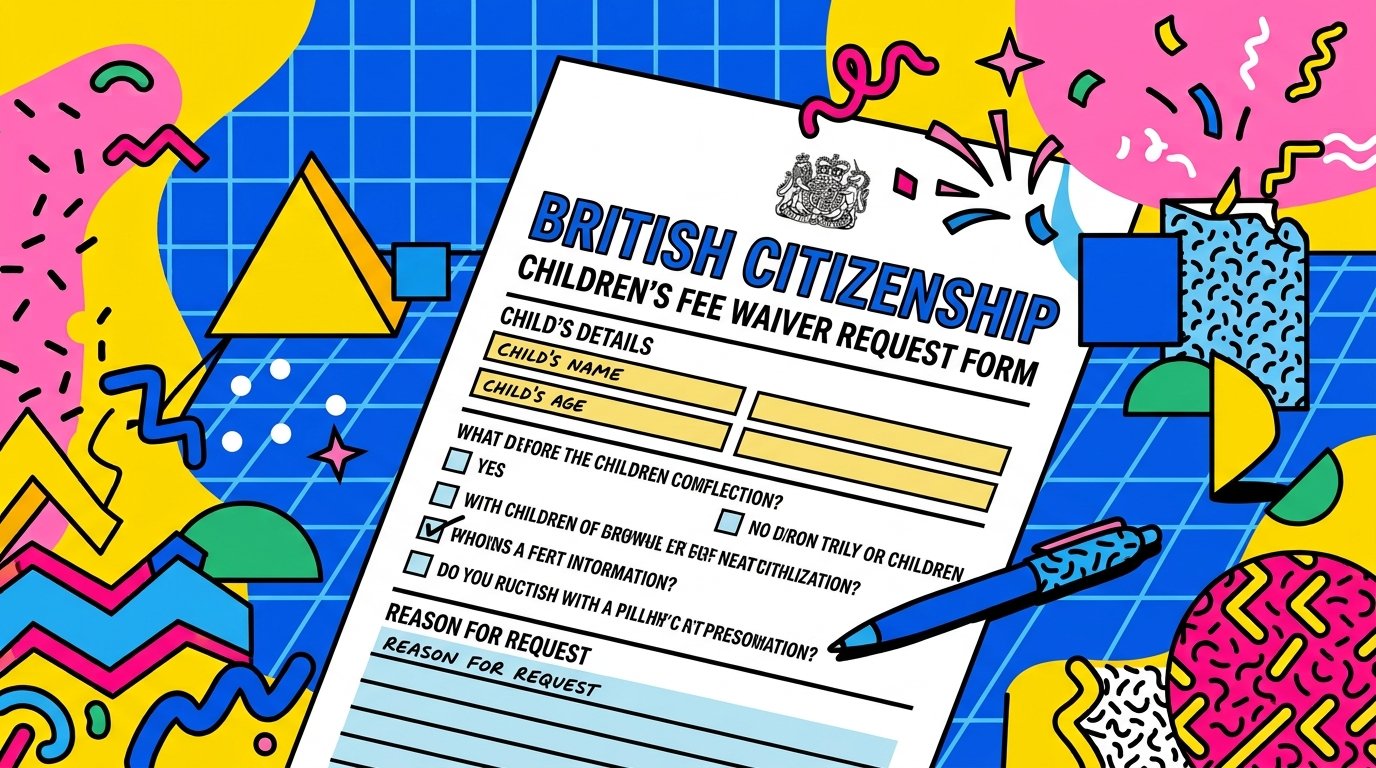
British Citizenship Fee Waiver for Children: A Complete 2026 Guide
Disclaimer: This is an independent informational portal. We are not affiliated with, endorsed by, or connected to any UK government body, council, or the Home Office. All information is provided for guidance purposes only. Always check the official GOV.UK website for the most up-to-date and legally binding information.
Introduction
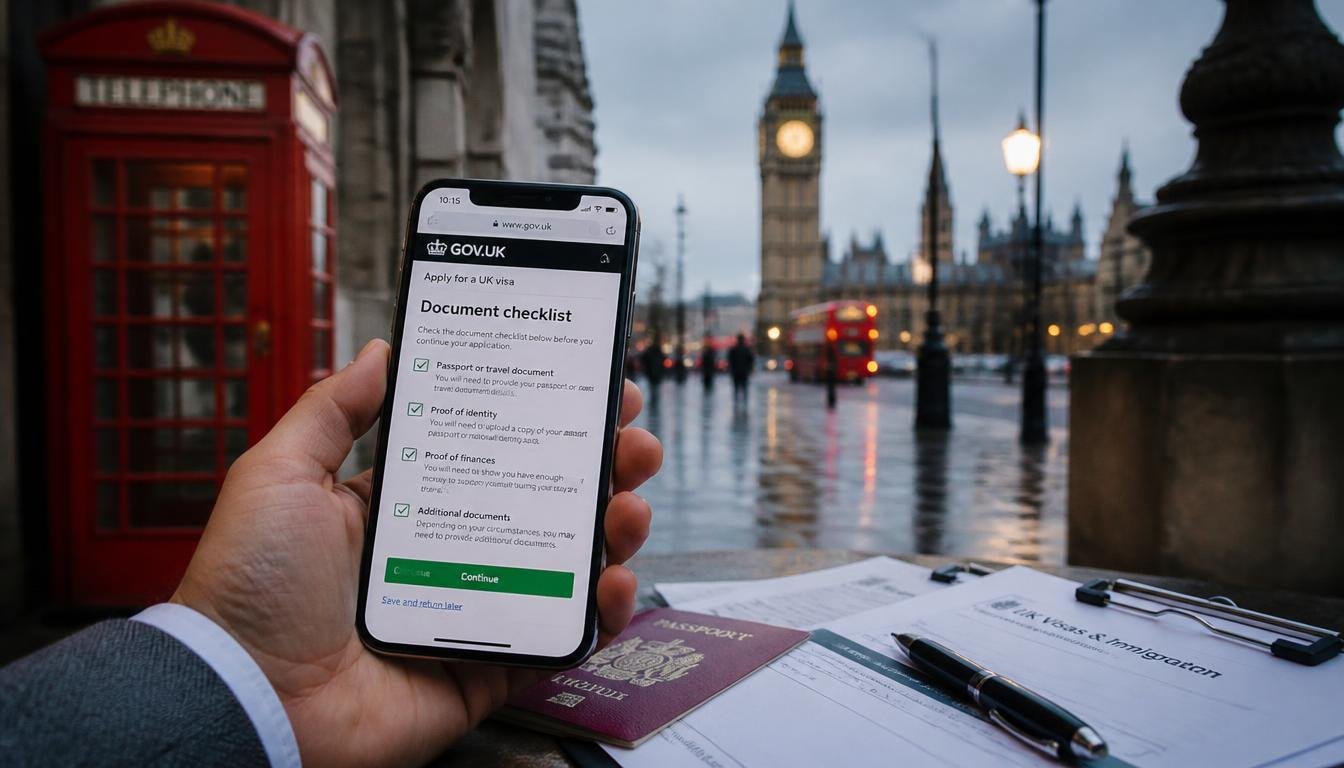
Applying for British citizenship for your child is a significant milestone, but the cost can feel like an impossible barrier. The British citizenship fee waiver for children in the UK exists precisely for families who cannot afford the registration fee without compromising their child’s essential needs.
From 8 April 2026, the standard fee to register a child under 18 as a British citizen was reduced from £1,214 to £1,000. While this reduction is welcome, £1,000 remains a substantial sum for many households. The good news is that the Home Office operates a formal affordability-based fee waiver for children, and in some cases, the fee is waived automatically.

This guide walks you through who qualifies, what evidence you need, how to apply, and what to expect. We are an independent informational resource, not a government body. Our aim is to help you understand the process so you can make informed decisions with confidence.
What Is the Child Citizenship Fee Waiver?
The fee waiver is a mechanism that allows a child under 18 to apply for registration as a British citizen without paying the £1,000 fee. It is not a discount or a payment plan. If granted, the fee is waived entirely.

The waiver is grounded in section 55 of the Borders, Citizenship and Nationality Act 2009, which requires the Home Office to consider the best interests of children in immigration decisions. Caseworkers must assess whether paying the fee would have a disproportionate impact on the child’s wellbeing.
Crucially, fee waivers are not available for adult naturalisation applications. They are specifically for children under 18 using the registration route, typically via Form MN1.
Important: A fee waiver does not mean your child’s citizenship application will be approved automatically. You must still meet the legal requirements for registration. The waiver only removes the financial barrier.

For a full breakdown of citizenship application costs, read our guide on UK visa and nationality fees.
Who Qualifies for a Child Citizenship Fee Waiver?
There are two distinct routes to having the fee waived. Your child may qualify under one or both, depending on their circumstances.
Route 1: Automatic Waiver for Looked-After Children

If your child is looked after by a local authority at the time the application is made, no fee is payable. You do not need to provide evidence of the child’s financial circumstances.
This exemption applies to:
Children in local authority care under a care order
Children accommodated by a local authority under section 20 of the Children Act 1989
Children for whom the local authority has parental responsibility
You will need to provide documentation from the local authority confirming the child’s looked-after status. This is usually a letter from the relevant council department.
Route 2: Affordability-Based Waiver
If your child is not looked after by a local authority, you can apply for an affordability-based fee waiver. The test is straightforward in principle: can you afford to pay the £1,000 fee without your child’s essential needs going unmet?
The Home Office assesses this by looking at:
Household income (from all sources, including benefits)
Savings and assets
Essential living costs (rent or mortgage, utilities, food, clothing, transport)
Other children in the household and their needs
Any additional needs your child may have
You are considered unable to pay the fee if, after meeting essential living needs, you do not have sufficient funds to pay the £1,000 without hardship.
Warning: Spending money on non-essential items, luxury goods, or holidays before applying could count against you. The Home Office expects families to prioritise essential needs and will scrutinise recent bank statements.
If you receive financial support from social services to help care for your child, you may automatically qualify for a waiver. You will still need to provide documents proving the support.
For a detailed breakdown of what counts as essential living costs, read our guide on UK immigration fee waiver evidence.
Step-by-Step: How to Apply for a Child Citizenship Fee Waiver
Applying for the waiver requires careful preparation. The process runs alongside the citizenship registration application, not separately from it.
Step 1: Confirm Your Child’s Eligibility for Registration
Before applying for a fee waiver, confirm that your child qualifies for British citizenship registration. Common routes include:
Born in the UK and lived here until age 10
Born abroad to a British parent
Statelessness
Discretionary registration under section 3(1) of the British Nationality Act 1981
You can check eligibility on GOV.UK using the official tools. If you are unsure, seek advice from a regulated immigration adviser or solicitor.
Step 2: Complete the Fee Waiver Request Form
The fee waiver request is made on a specific paper form that must be submitted together with the citizenship application form (typically MN1).
The form asks for:
Details of the child and the person making the request
Household composition
Income and expenditure information
Details of any local authority support
A declaration that the information provided is accurate
Each child needs a separate fee waiver request form, even if you are applying for siblings at the same time.
Step 3: Gather Your Supporting Evidence
This is the most time-consuming part of the process. The Home Office expects comprehensive evidence covering the six months before the application date.
You should provide:
Bank statements for all accounts held by you, your partner, and the child (if applicable)
Payslips or evidence of self-employment income
Benefit award letters (Universal Credit, Housing Benefit, Child Benefit, etc.)
Tenancy agreement or mortgage statement
Utility bills (gas, electricity, water, council tax)
Letters from local authorities or family members confirming financial support
Evidence of any additional needs the child has (medical letters, educational support plans)
A personal statement explaining your financial circumstances and the impact paying the fee would have
Tip: Bank statements should show all transactions, not just balances. The Home Office will look at spending patterns. If you have made large purchases recently, be prepared to explain them.
Step 4: Submit Both Applications Together
Submit the fee waiver request form and the citizenship application form (MN1) together. If you submit them separately, the application may be delayed or rejected.
Send them to the address specified on the form. Keep copies of everything you send. Consider using recorded delivery so you have proof of posting.
Step 5: Wait for the Decision
There is no published standard processing time for fee waiver decisions. In practice, you may wait several weeks to several months. During this time, the Home Office may contact you for additional information.
If the waiver is granted, the citizenship application will proceed without the fee. If it is refused, you will be given the option to pay the fee or withdraw the application.
For more on processing times, read our guide on UK visa processing times.
Checklist: What You Need Before You Apply
Use this quick reference to make sure you have everything ready.
- □
Confirmed your child meets the legal requirements for citizenship registration
- □
Downloaded the correct fee waiver request form from GOV.UK
- □
Completed a separate form for each child
- □
Collected 6 months of bank statements for all relevant accounts
- □
Gathered payslips or income evidence for all household earners
- □
Collected benefit award letters
- □
Prepared proof of housing costs (tenancy agreement or mortgage statement)
- □
Obtained letters from any organisation providing financial support
- □
Written a personal statement explaining your circumstances
- □
Copied all documents for your own records
- □
Submitted both forms together via recorded delivery
Common Reasons for Refusal (And How to Avoid Them)
Understanding why waivers are refused can help you strengthen your application.
Insufficient evidence. The most common reason for refusal is not providing enough documentation. The Home Office needs to see a complete financial picture, not just a snapshot.
Unexplained spending. If your bank statements show significant spending on non-essential items, the caseworker may conclude that you could have prioritised the fee.
Income above the threshold. There is no fixed income threshold, but if your household income comfortably covers essential needs with surplus, the waiver may be refused.
Missing deadlines. If the Home Office requests additional information and you do not respond within the deadline, your request will be rejected.
Applying for the wrong route. Fee waivers are only available for child registration applications, not adult naturalisation. If you are applying for yourself as an adult, you will need to pay the full fee.
Frequently Asked Questions
Can I apply for a fee waiver if I am not the child’s parent?
Yes. A fee waiver request can be made by any person acting on behalf of the child, including a legal guardian, local authority, or solicitor. You will need to provide evidence of your relationship to the child and your authority to act.
Does a fee waiver cover the citizenship ceremony fee?
The fee waiver covers the registration application fee. If your child turns 18 before the decision is made, a £130 citizenship ceremony fee becomes payable if citizenship is granted. The waiver does not automatically cover this.
What happens if my fee waiver is refused?
If the waiver is refused, you will be given the option to pay the £1,000 fee to continue the application. If you cannot pay, you can withdraw the application. You may also be able to request a review of the decision, but this depends on your circumstances.
Can I apply for a fee waiver if I am on a low income but not receiving benefits?
Yes. The affordability test is not limited to benefit recipients. If your income after essential costs is insufficient to pay the fee without hardship, you may qualify. You will need to provide detailed evidence of your income and expenditure.
How long does a fee waiver decision take?
There is no published timeframe. Decisions can take several weeks to several months. Submitting a complete, well-evidenced application reduces the risk of delays caused by requests for further information.
Is the fee waiver available for children applying under the EU Settlement Scheme?
No. The fee waiver described in this guide applies to British citizenship registration for children. Different rules apply to EU Settlement Scheme applications, which have their own fee structure.
Conclusion
The British citizenship fee waiver for children in the UK is a vital safeguard for families who cannot afford the £1,000 registration fee without risking their child’s wellbeing. The process requires careful preparation and comprehensive evidence, but it is achievable for those who genuinely cannot afford the cost.
The two routes—automatic exemption for looked-after children and affordability-based waiver for others—provide options for different circumstances. The key to success is thorough documentation and honest disclosure of your financial situation.
If your child is eligible for registration and you cannot afford the fee, do not let cost deter you from applying. The waiver exists for exactly this purpose.
For more guides on UK immigration and citizenship, explore our website. We cover everything from visa costs to application checklists to processing times.